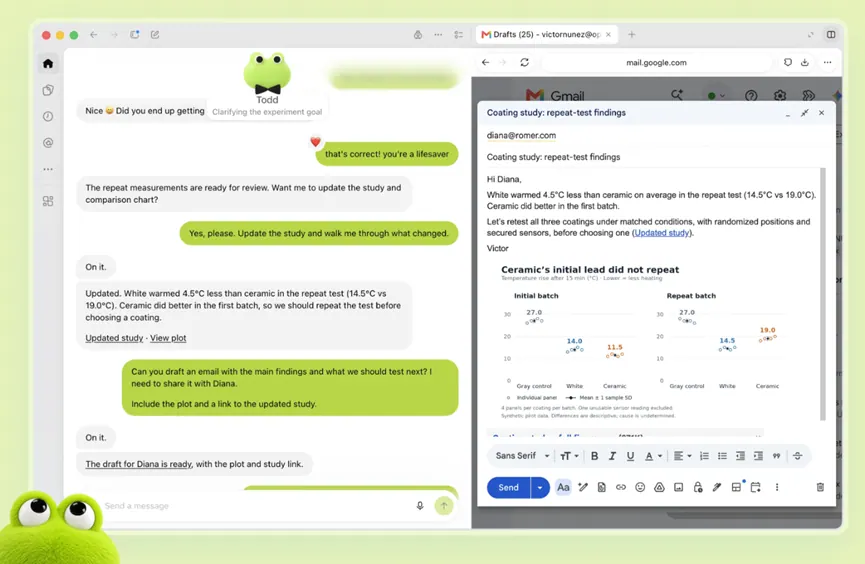
Research — update analysis with new evidence. You’re a scientist. Your dot learns the research question and how you evaluate evidence. As new data arrives, it reruns analyses, investigates unexpected results, and updates figures. When findings change, it revises supporting explanation and flags what needs your review. You return from the lab to work that reflects the latest evidence — with human review still required on claims.
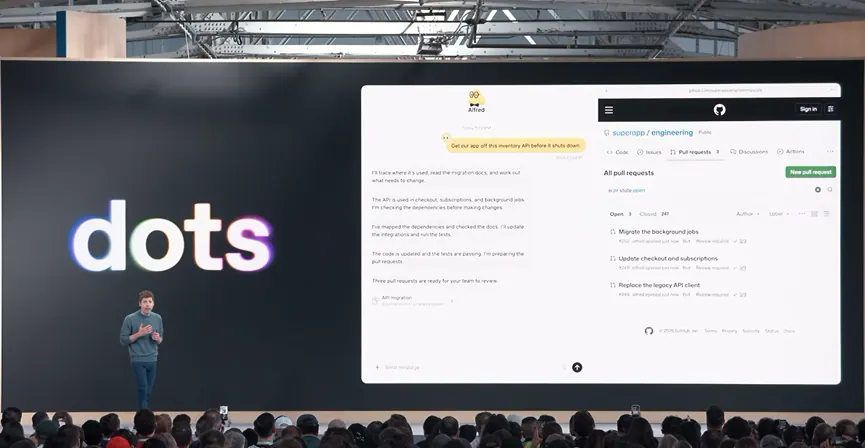
Sales / solutions — update a proposal as requirements shift. You’re guiding an enterprise deal through technical review. Your dot checks customer requirements and account history against product docs, finds what still needs testing, builds a proof-of-concept outline for a key integration, and can suggest who has handled similar deals. As requirements and tests change, it updates the proposal and test plan and flags open concerns. You and your engineer approve commitments.
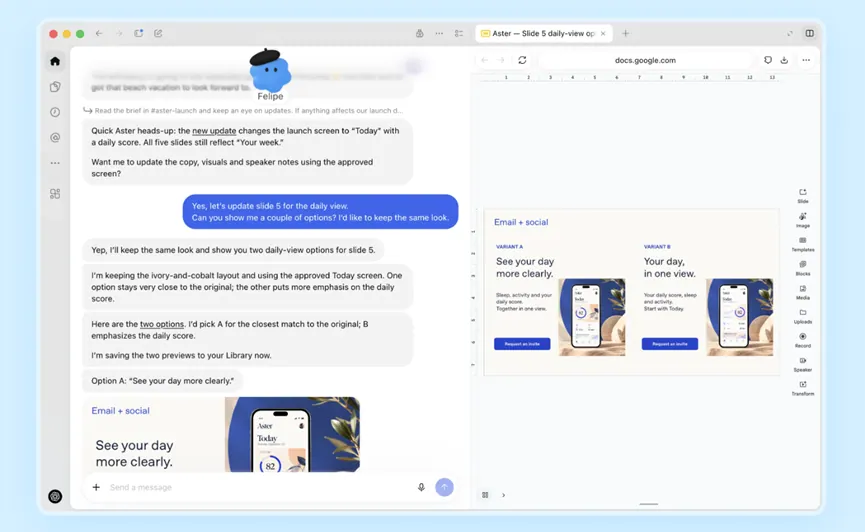
Creator — automate content production work. Your dot learns your voice and what matters to the audience. When a new interview transcript arrives, it identifies clip moments, prepares show notes, and drafts social posts. Edits you make can sync across materials so the package stays consistent.
Safety defaults that matter here. Proactive research is described as read-only; sensitive sends and external commitments need approval. Local computer access starts off. Read safety and OpenAI’s safety post.
Context. Workflow control model: deep-dive. Dev/launch pair: developer + launch (PR review video demo). Index: sketches overview (prompts / 24/7 video demo). Official: Introducing dots, features.