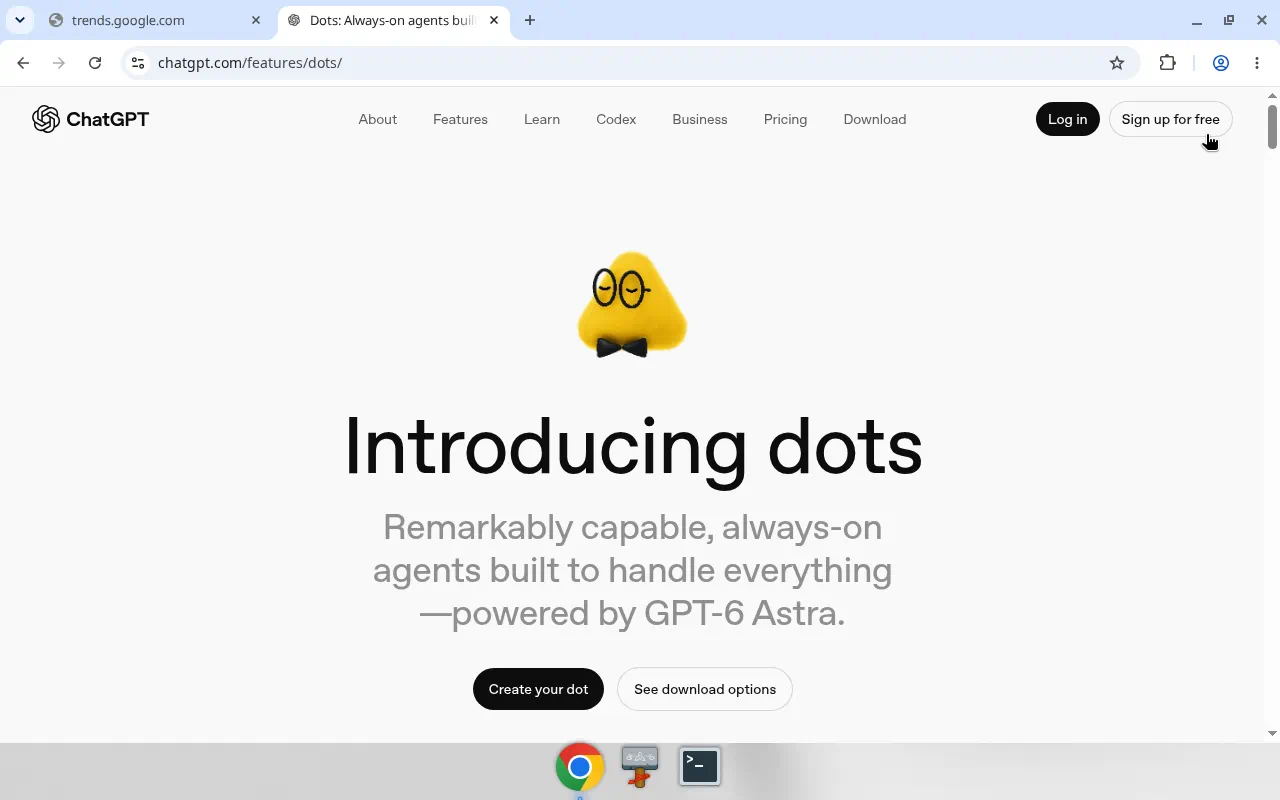
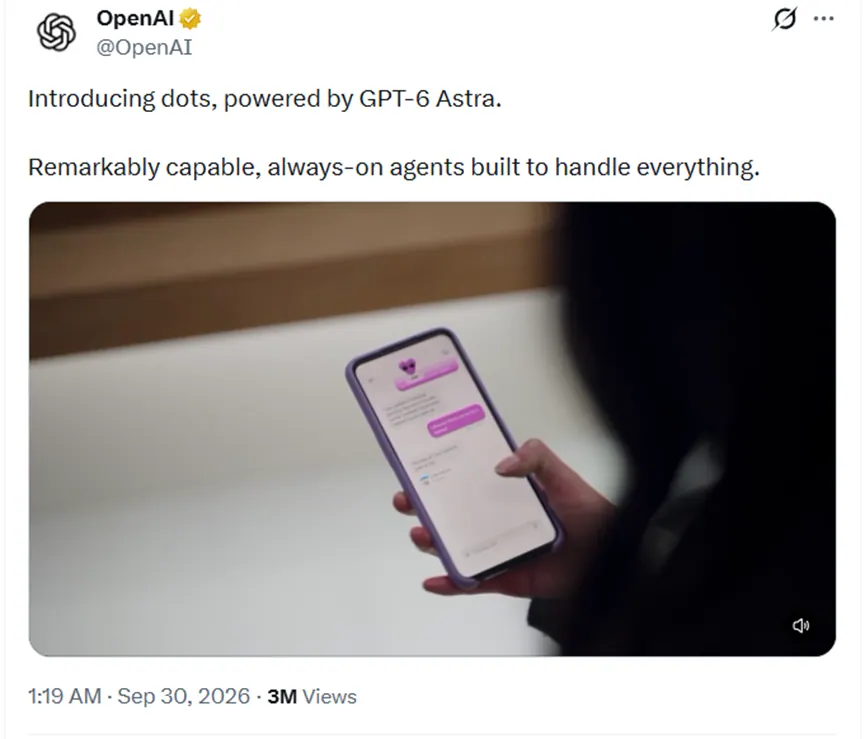
Identity and vendor. dots is OpenAI’s product name for always-on agents powered by GPT-6 Astra, living in the ChatGPT ecosystem. Muse is Meta’s personal agent brand. They are not the same company, not the same apps, and not a shared specification. Prefer Introducing dots and ChatGPT features — dots for OpenAI facts. For Muse, paraphrase only what Meta publishes publicly — otherwise label it “verify on the vendor page.” Short definition: what is dots.
Computer and VM. OpenAI describes each dot as having its own cloud computer and browser that you can open to inspect work. Muse is commonly described as giving each person a secure VM, with credentials kept apart from the main model. Both pictures include a persistent machine; the hosting vendor and credential story differ. Do not assume sandbox policies are interchangeable.

Audience — work vs life. Community framing (and our comparison table) puts dots next to people already in ChatGPT who want longer work carried through tools: developer fixes, launch revisions, research, sales, creator production. Muse is aimed at life admin for individuals and households — mail, calendar, travel, shopping, and long-running personal goals. Overlap exists (everyone has errands and projects), but default pitch and app surfaces diverge.
Integrations. dots connect through OpenAI’s plugin ecosystem to over 4,000 apps, and OpenAI describes reach in ChatGPT (desktop, web, mobile), Slack, and Teams, with texting expanding. Muse integrations are framed around life services (mail, calendars, checkout, and similar) as Meta describes them — confirm the live list on Muse’s own pages. Comparing “how many apps” across vendors without citing each vendor is misleading.
Control and approvals. OpenAI’s control model for dots includes Custom Rules, Auto-review, and approvals for consequential actions; the workspace is a separate cloud environment; local computer access starts off; proactive research is described as read-only. Community summary: safety and OpenAI’s safety post. Muse’s approval and credential model should be read from Meta — do not invent shared defaults.
Eligibility and pricing (no invented dollars). Official dots rollout: Pro and Business Premium in eligible markets; Enterprise / Edu / Healthcare as admin-enabled beta. The first dot is included at no extra cost; plans include an allowance for deeper work, with first-month notes on Help. Conversations with a dot do not count toward ChatGPT usage; Codex / ChatGPT Work tasks a dot starts still do. See eligibility and pricing — this site does not invent a Dots dollar price or Muse SKUs. ChatGPT plan dollars belong on ChatGPT pricing. Muse pricing: verify on Meta.
Who should pick which. Choose dots if you already live in ChatGPT plans, want Slack/Teams collab, and need an always-on agent for work-shaped goals with OpenAI’s approval model. Choose Muse if you want Meta’s personal life-admin agent and its own apps/VM story — and you are willing to confirm current capabilities on Meta’s pages. Many people may use neither or both for different jobs; this post is orientation, not a scorecard. Related: workflow deep-dive, DevDay highlights.