What was posted. On 2 October (UTC+8) @OpenAIDevs shared a nine-minute video captioned simply "dots demo. Now... with better WiFi." It is the most-engaged official dots post since launch (19k+ likes at the time of writing). The presenter explains that the on-stage demo didn't go to plan, so this is a straight replay of her real workflow — no cuts, no staged UI. Below is an 82-second highlight (2:46–4:08 of the original) hosted here for quick viewing; watch the full nine-minute video on X.
Community-hosted · attributed
Official OpenAI Developers video (attributed @OpenAIDevs): 82-second excerpt, 2:46–4:08 — travel-time estimate, the dot's browser, hotel photos and "prepare, then verify price and cancellation terms." Full 9-minute version on X: https://x.com/OpenAIDevs/status/2105708732323909827
Job one: a last-minute trip, by voice. She calls her dot from her phone: she needs to be in Hollywood by mid-afternoon tomorrow, wants a flight that is within company travel policy and refundable, and hotel options with photos and map screenshots so she can choose. While still on the call, the dot surfaces a candidate flight, flags that it still has to verify the checkout total and policy, estimates airport-to-Hollywood time and suggests landing earlier for a safer buffer, and drops hotel photos and Google Maps views into the chat. When she picks a hotel, the dot says it will prepare a one-night booking and confirm the full price and cancellation terms — not silently buy it.
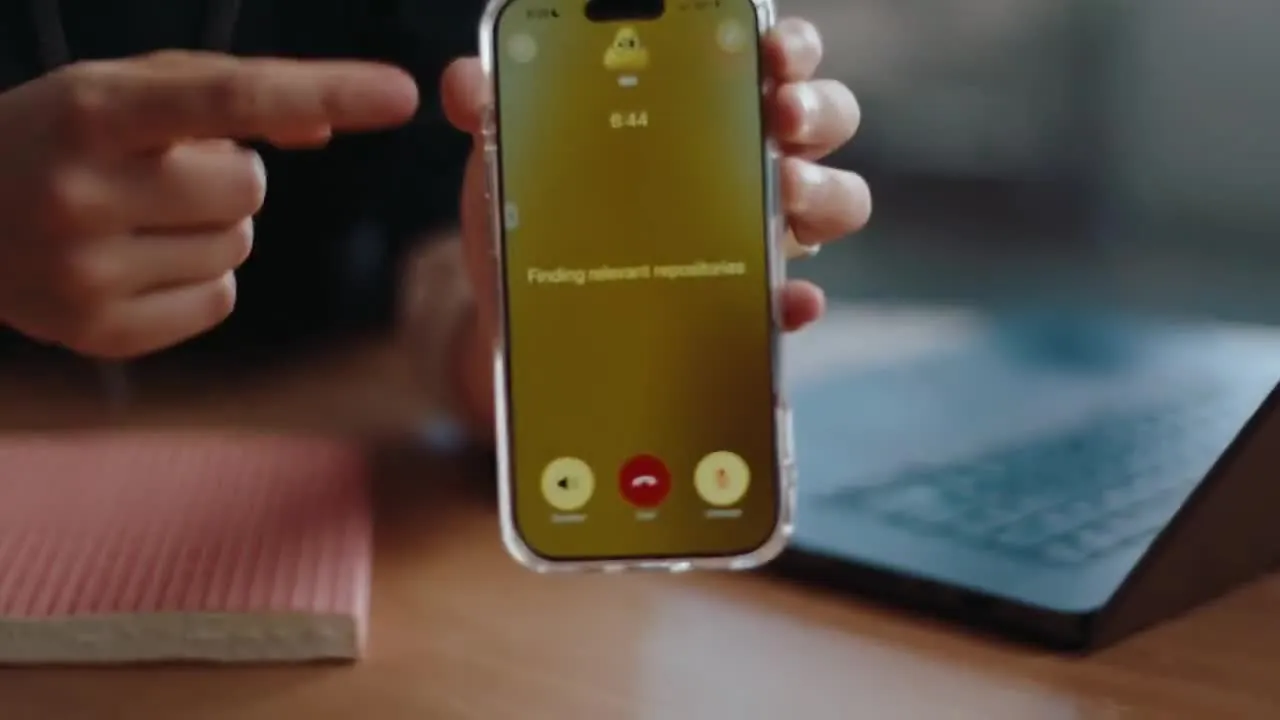
Job two: turning a noisy feedback channel into a loop. Mid-call she adds a second request: summarise the biggest feedback themes, which ones already have fixes, and what nobody is watching. The dot first describes the current (manual) capture workflow — channel → master list → classification → linked tickets → matched PRs — then agrees on the missing piece: when a fix ships, go back to the original Slack thread with the PR link and ask people to retry. That "close the loop" behaviour matches what OpenAI's docs describe for assigned work and event monitoring.
The candid bit: reliability is the top complaint. Asked for the biggest theme in the last 24 hours, the dot answers that people can't always tell whether their dot is working — it looks active but doesn't reply, or can't reach its tools. On screen it reports reliability as the largest category (131 of 386 feedback signals in the window it reviewed), with mobile visibility and notification routing as separate issues. It is unusual — and useful — to see an official demo surface its own product's weak spot. See our week-one friction roundup.
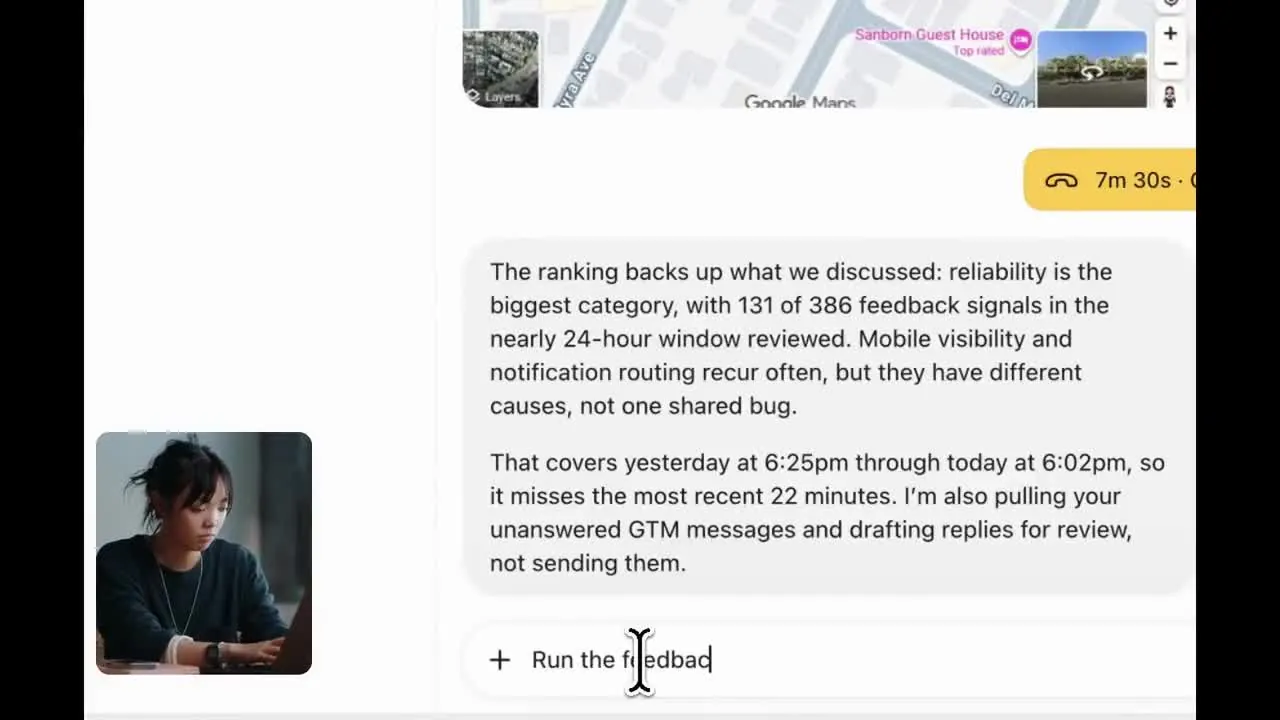
Job three: drafts, not sends. Finally she asks the dot to collect unanswered Slack questions about how dots relate to ChatGPT, Slack and Teams, and to draft replies. The dot is explicit that it is drafting for review, not sending. Combined with the "verify before booking" step above, the demo is a good illustration of the approval model in safety and OpenAI's controls docs.
What the demo does — and doesn't — show. It shows one dot juggling several tasks across a phone call and the desktop chat at once, with the same context. It does not prove booking success rates, travel-policy integrations for every company, or timing guarantees; the booking was still in progress when the video ended. Treat it as an official illustration, not an SLA. Plan gates and usage: eligibility, pricing.
Related. Launch context: DevDay full recap. How dots hand work to Codex: dots + Codex. Real-world proactive examples: week-one proactive wins. Official: Introducing dots, features.